In Memoriam
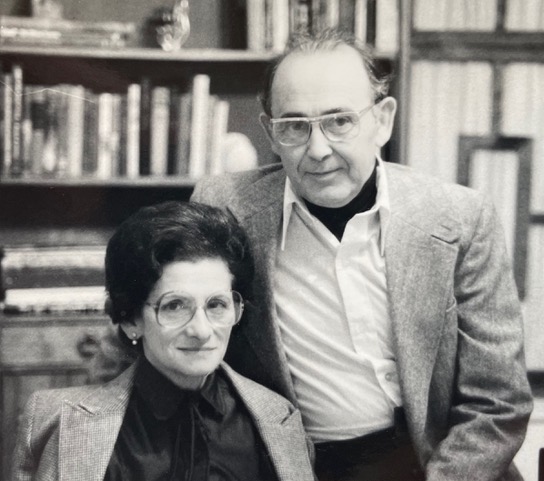
Helen & Arie Tabak Memorial Fund
About the Fund
On October 25th, 2022, we announced the creation of the Helen and Arie Tabak Memorial Fund. It was Arie’s 100th birthday anniversary. We’re dedicating the fund to promote Holocaust education in memory of Helen and Arie.
At a time when antisemitism is on the rise, we feel it important to support educational venues to counter the growing disinformation and hate groups. Arie was a survivor of the Ebensee concentration camp in Austria and Helen survived in hiding while most of her siblings and families were murdered by the Nazis and their collaborators.
This memorial fund is managed as a “donor directed fund” through the non-profit Jewish Communal Fund of NY. We as a family will determine where funds will be donated and 100% will be strictly for educational purposes.
To contribute to our fund, please fill out the form and reference the Helen and Arie Tabak Memorial Fund (#7391)
Any questions, please reach out to Harry C Tabak @ HCTabak@gmail.com.
Eitan Tabak, executive director
Harry C Tabak, director
Joshua Tabak, director
About Helen & Arie
We have very little information about our family from the ‘old country’. They didn’t talk much about it, especially Helen. We hope to add to their history as we research some more.
HELEN ICKOWICS TABAK – Born in the small town of Chust, Czechkoslovakia (now Ukraine) in 1925. We don’t know much about Helen’s history and some family members think she was born in the town of Kapanya where her brother Issac was born. Rivkah Ickowics was her mother’s maiden name and her father was Zev Moskowitz. Helen had six siblings and she and her brother, Issac were the only survivors of the Holocaust in their family.
ARIE TABAK – (aka: Zvi Aryeh) went by the Hungarian nickname “Lajos” while in Europe – born in the town of Sighet, Rumania in 1922. His father was Chaim Tabak and mother Rachel Zichermann.
He left home to work in Budapest as a printer but returned to Sighet as the Nazis were searching for Jews. He was loaded on a freight train from the Ghetto in Sighet and sent to the Auschwitz Concentration camp in Poland, then to Mauthausen concentration camp. He was then moved to the Ebensee Camp in Austria for slave labor where he was freed by US forces in May 1945.
In 1996, Arie was interviewed for Steven Spielberg’s Shoah Foundation program to preserve survivors’ stories.
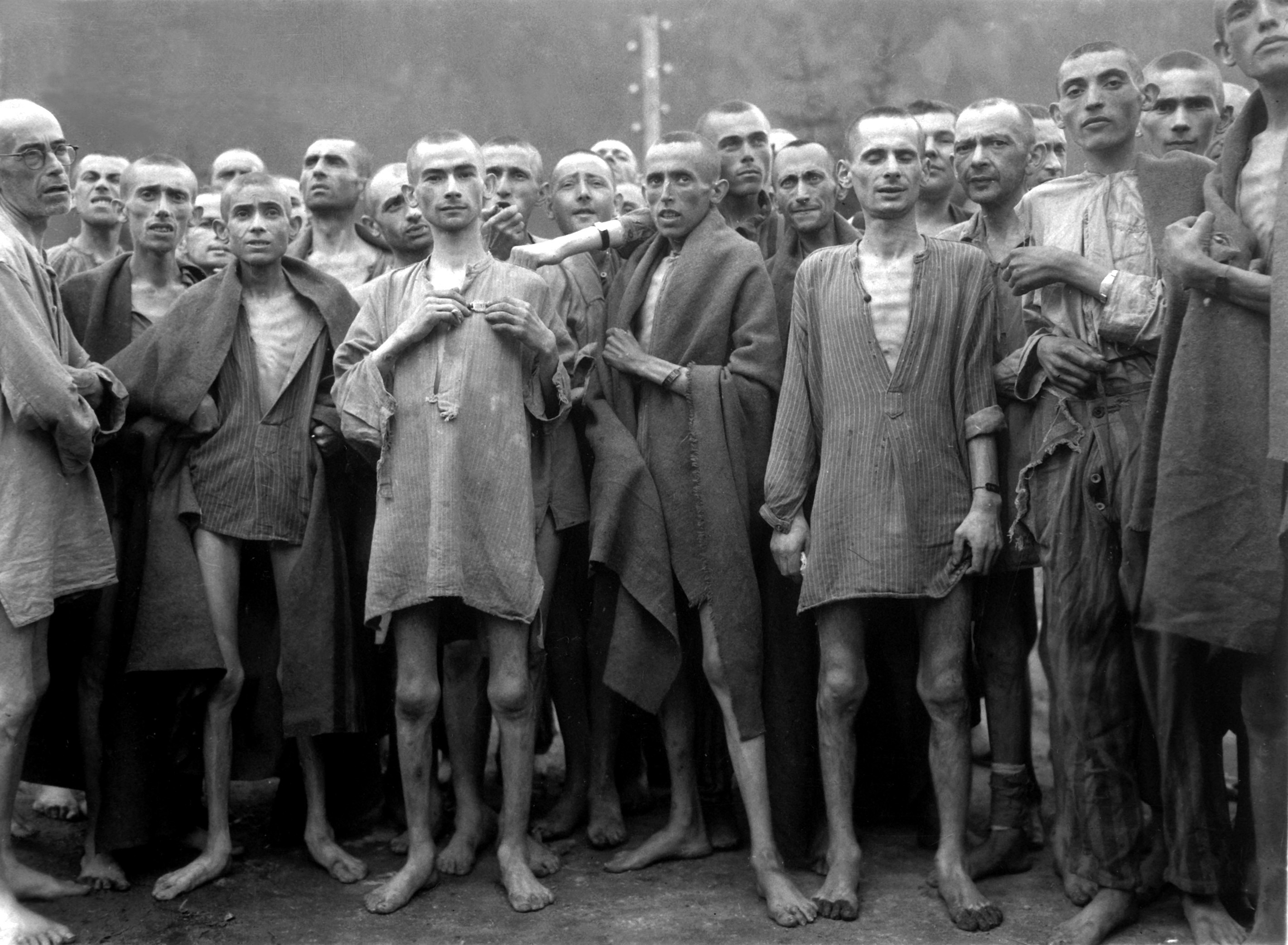
Inmates of Ebensee concentration camp after their liberation by American troops on 6 May 1945 (Photograph by Arnold E. Samuelson)
In May 2025, one of Helen and Arie’s grandsons, Eitan Tabak, visited the Auschwitz-Birkenau concentration camp with his wife and daughter, the youngest of their descendants. It was 81 years after Arie was deported to Auschwitz from Sighet in May of 1944, together with his sister Adela (then age 29) and her two young children, 9-year-old daughter Etti and 7-year-old son Moti.
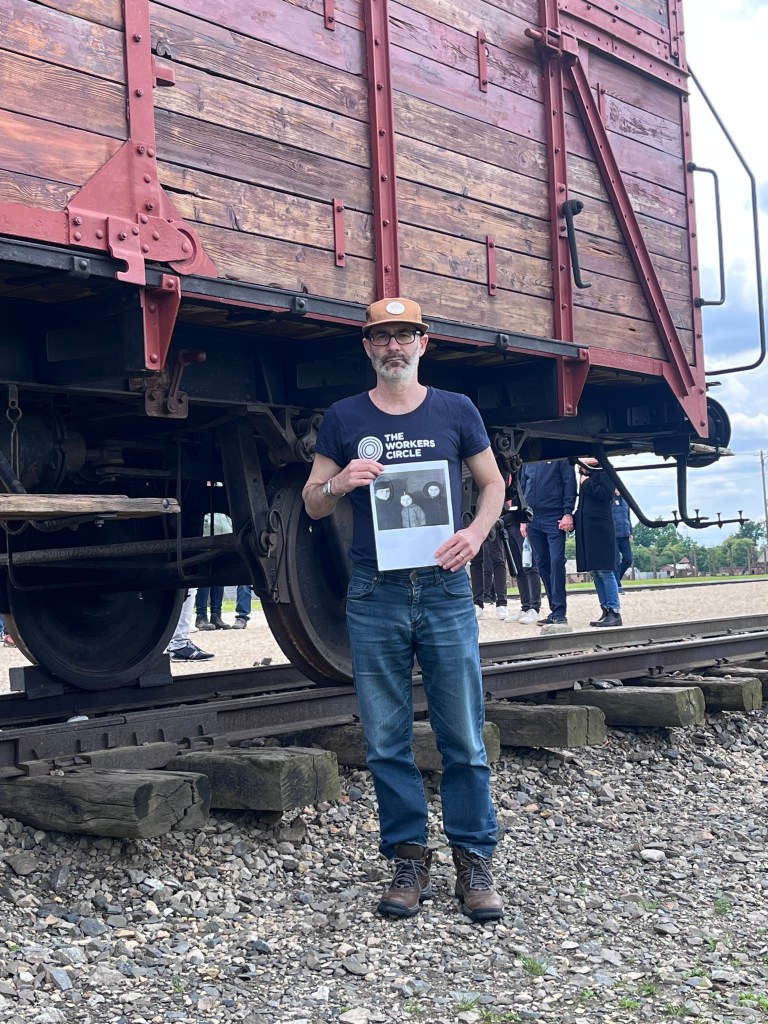
Eitan at the Auschwitz-Birkenau train platform, near the spot where deportees were separated, with most women and children sent directly to the gas chambers. He is holding a picture of Arie’s sister and her children. It is likely that this is where Arie was with them for the last time.
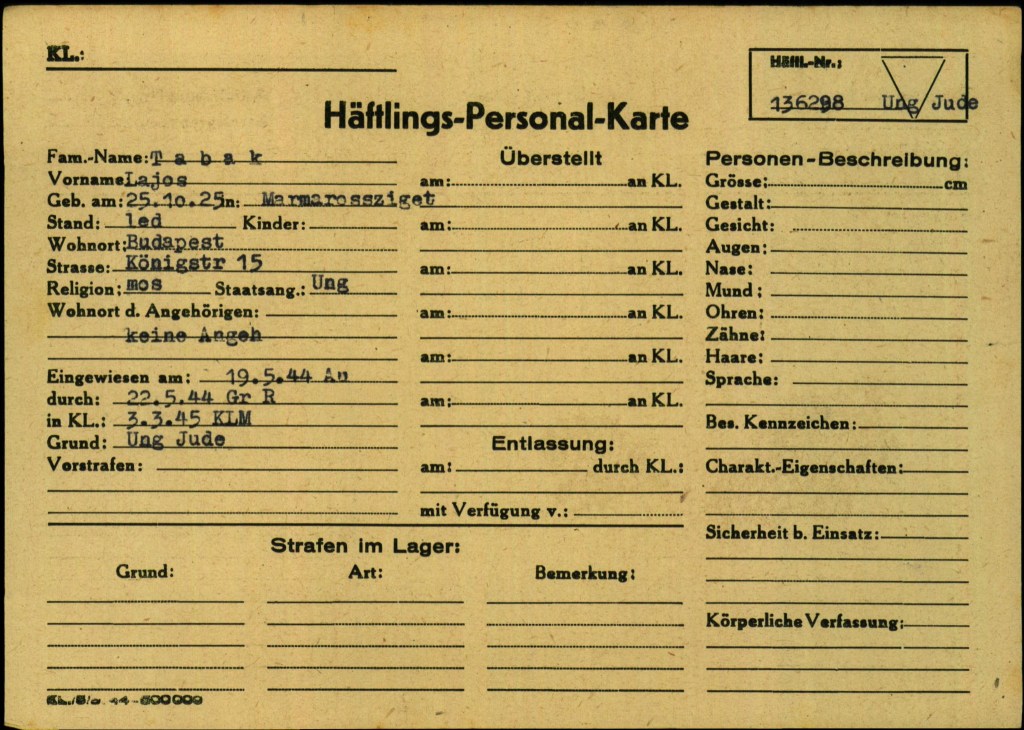
Arie’s labor camp card, which lists the dates of his arrival at Auschwitz (May 19, 1944) and departure from Auschwitz (May 22, 1944, sent to Gross Rosen labor camp, of which Mauthausen was a part). He was never registered as a prisoner in Auschwitz.
 Helen & Arie Tabak Memorial Fund